Operational consulting for growing UK businesses · Lincoln

Everything works when everything goes right.

We find out what happens when it doesn't. Then we tell you what's worth fixing, and what isn't.

Show me where it breaks

Thirty minutes, free, no preparation.

See what the Diagnostic includes

Operational Diagnostic £750 · credited in full if you implement with us within 30 days

Most operational problems do not look broken.

They look like a normal Tuesday. Jobs get finished. Customers get served. The team knows what to do.

Then someone important is off. A customer changes the job at the last minute. You need to prove what happened last Thursday. That is when the unofficial version of the process shows.

Someone important is away

Each person has their own way of getting the job done.

What worked at five people is straining at twenty

You hire to keep up with the admin

Simple questions take a tour of the team.

Only one or two people fully understand the spreadsheet

The same information is entered more than once

After a complaint, the history isn't complete enough to show it.

What that task costs you

A task that takes an hour a week, done by someone on £30 an hour, costs about £1,400 a year. Every year, until someone changes it.

Recognise one of these? Pick the one that worries you most, and book a free call.

If it only holds because the right person is in the room

If a workflow only holds because the right person is in the room, or key work still runs in spreadsheets, inboxes, or one person's head, this is for you.

  • Cleaning and facilities
  • Care providers
  • Field service and trades
  • Logistics and transport
  • Construction and groundworks
  • Professional services

We start with the operation, not the software

Technology comes after we know what's actually going on, and only if it's the right answer.

  1. 1

    Show us how it actually works now

    Workarounds included.

  2. 2

    Tell us what happens when it goes wrong

    Someone's off. It gets busy. The customer changes their mind.

  3. 3

    We find what's making it harder than it needs to be

    Manual work, the same thing entered twice, one person who knows.

  4. 4

    We fix only what's worth fixing

    Sometimes the process. Sometimes automation. Sometimes nothing.

  5. 5

    We build it if that's the answer

    If it needs software, we make it. That's the part most people can't do.

Operational Diagnostic

Not a quotation dressed up as a report.

This is the first paid engagement. It is a focused look at one operational area. We talk with the people who run the process. We look at the spreadsheets, the job sheets, the inboxes, the handoffs. Then we pressure-test the work against absence, volume, exceptions, and incomplete information.

Operational Diagnostic

£750 · one operational area · about 3 working days

What you receive

  • A map of how the work actually runs today, workarounds included
  • The friction points, and the places that depend on one person
  • What happens under pressure: someone off, a busy week, a last-minute change, missing information
  • Prioritised recommendations, each marked as one of: leave as it is · change the process · use an existing tool better · automate or connect · build something new
  • A walkthrough call to go through it together

If you go ahead with implementation within 30 days, the full £750 is credited against the first phase.

Detailed in his approach, easy to collaborate with.

Yor brings precision and focus to every stage of the work. He's detailed in his approach, easy to collaborate with, and consistently engaged with what we're building. That combination has made the development process straightforward and genuinely enjoyable.

Working together since August 2025.

The Diagnostic is yours to act on internally, hand to another supplier, or leave for later. From there, you have four options:

1

Act on it yourselves

2

Hand it to another supplier

3

Have us implement it, with the £750 credited

4

Change nothing for now

Talk it through first

Free, thirty minutes. The Diagnostic only starts if it's worth doing.

How this looks in practice

What happens when a customer says your team damaged something on site?

What we saw

Jobs got done, but there wasn't always a record of the site before and after.

What changed

How work is recorded, and what the procedure has to cover.

What happened

Tested on real jobs. Software stayed off the table until the process was clear.

Four ways this ends. Only one of them is software.

A Diagnostic does not always lead to software. Sometimes that's a new system. Often it's a better way to use the tools you already have: a clearer procedure, a small internal tool, or nothing at all.

Process and procedures

The job doesn't depend on who happens to be in.

Better use of what you already have

Make the existing system carry the work it's meant to.

Automations and integrations

Stop copying and pasting between tools.

Internal tools and bespoke software

Small screens built for one job, when existing tools can't hold it.

Who you'll work with

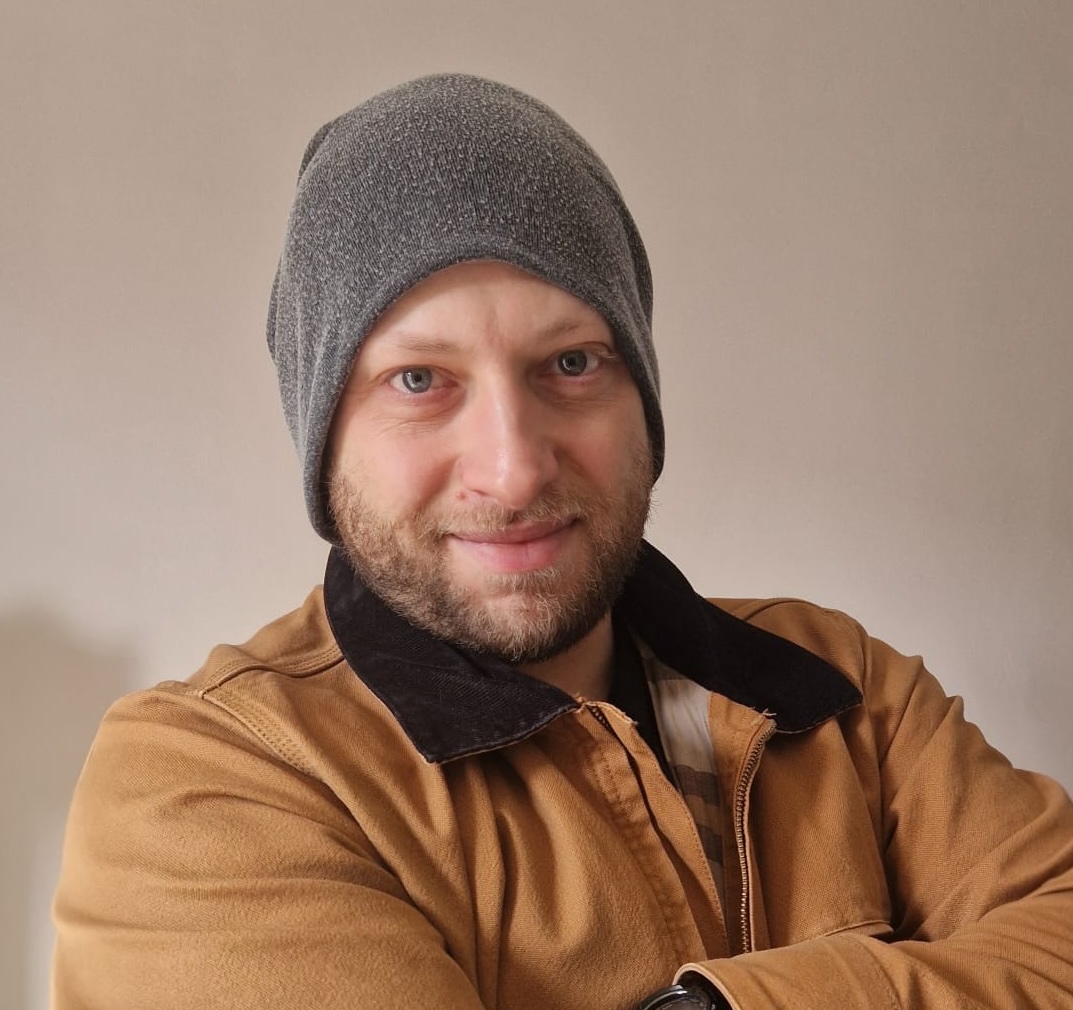
Yor Francavilla, founder of The Polyglot Lab

I'm Yor, usually the one in the grey beanie and Carhartt jacket. Based in Lincoln, and happy to meet on site.

I run The Polyglot Lab, a founder-led consulting practice for growing UK businesses. I investigate how work really moves, find where people are quietly holding it together, and recommend what is actually worth changing.

Before The Polyglot Lab, I spent twelve years as a project manager on Vodafone programmes at Reply, then worked as a Technical Account Manager at Khoros and CrowdStrike, where the job was handling escalations for enterprise customers when things went wrong.

What it costs, before you ask

Most clients start with a free Discovery Call, then an Operational Diagnostic. Implementation and Ongoing Support are optional. You can stop at any of the earlier stages.

  1. Discovery Call

    Free, 30 minutes

    Is there something here worth looking at?

  2. Operational Diagnostic

    £750

    One area mapped, pressure-tested, with prioritised recommendations.

    Credited in full against the first implementation phase if you go ahead within 30 days.

  3. Implementation

    £2,000 to £6,000 per module

    One clearly defined change at a time, only where it's worth it.

  4. Ongoing Support

    from £350/month

    Check-ins, small adjustments and help as things change.

Just one repetitive task you'd like off your plate? There's a smaller, fixed-price option.

Start with the free call

If you can sort it yourselves, we'll say so.

Questions we hear often

How much does an Operational Diagnostic cost?

The Operational Diagnostic is £750. It is a focused review of one operational area, including process mapping, pressure-testing, and prioritised recommendations. You leave with a diagnosis whether or not you ask us to implement anything. Discovery calls are free and last 30 minutes. Implementation is £2,000 to £6,000 per module, priced individually. Ongoing support starts from £350 per month.

What businesses do you work with?

We work with small and medium-sized UK businesses, including cleaning and facilities companies, agencies, professional services firms, and operations-heavy teams. We help businesses where day-to-day work still depends on spreadsheets, inboxes, disconnected tools, or the people who know how the job actually gets done.

Do you always recommend software?

No. We diagnose first. The recommendation may be a process change, clearer procedures, better use of an existing system, automation, integration, a small internal tool, bespoke software, or doing nothing because the problem is not worth fixing. We do not recommend software just because we can build it.

What happens to the £750 if we go ahead?

If you ask us to implement any of the recommendations within 30 days, the full £750 comes off the first implementation phase. If you don't, the Diagnostic is still yours to use however you like.

What counts as one operational area?

One workflow with a clear start and end. Scheduling and cover, job evidence and sign-off, or weekly reporting are typical examples. We agree the area in writing before we start.

Do you ever recommend your own software?

Sometimes. Connect, built by our sister company Modulinc, handles clocking and absence for cleaning teams. If it fits your operation, we'll say so plainly. If something you already use does the job, we'll say that too.

Can you help with just one small task?

Yes. If it's one repetitive task and doesn't need your systems connected together, there's a smaller fixed-price option. If it turns out to be bigger, we'll say so.

Start with the free call

No preparation needed.

Start with the job only one person can do.

Thirty minutes. We'll talk about how that job actually gets done, and whether there's anything worth a closer look. You won't get a software pitch.

Show me where it breaks

You'll leave knowing whether there's anything worth investigating.